Local weather change is now a high problem for development as a result of because it will increase the frequency of utmost climate occasions (floods, heatwaves, hurricanes), disrupts challenge timelines, injury supplies and will increase security threat. As well as, it forcing new constructing codes, stricter emissions laws and calls for for resilient, low-carbon designs, all of which drive up prices and complexity. Buyers are more and more demanding climate-friendly planning techniques, which make conventional manufacturing methods much less dependable and costlier

Local weather change describes long run shifts in world or regional local weather patterns. It’s pushed by pure elements and, predominantly, by human actions that alter the focus of greenhouse gases within the environment, altering the Earth’s vitality steadiness.
Within the constructing and development sector, local weather change influences design choices, materials choice, and long run efficiency. Understanding local weather change helps engineers and builders in planning for resilience, vitality effectivity, and low emissions throughout a construction’s lifecycle.
What’s Local weather Change?
- International warming is the continued rise in common world temperature linked to elevated greenhouse fuel concentrations.
- Greenhouse gases embrace carbon dioxide, methane, and different emissions from burning fossil fuels.
- Human actions are a principal driver, alongside pure variability, shaping present local weather traits.
Why it issues within the twenty first century
- Excessive climate occasions and shifting precipitation patterns have an effect on development materials efficiency and sturdiness.
- Decreasing CO2 emissions in vitality and transport helps sustainable constructing practices and lowers working prices.
- Coverage frameworks and worldwide agreements information targets for vitality effectivity and resilience in buildings and infrastructure.
1. Causes of Local weather Change
Human actions and greenhouse fuel emissions
Human actions elevate atmospheric greenhouse gases, rising the planet’s vitality retention. The primary gases are CO2 and methane, with CO2 launched from fossil gas combustion and methane arising from vitality, agriculture, and waste processes. These emissions construct up within the environment and shift the worldwide vitality steadiness over time.
- Burning fossil fuels for vitality and transport stays the dominant supply of CO2 emissions.
- Methane launched throughout fossil gas extraction, enteric fermentation in ruminant animals, and manure administration contributes considerably to CH4 ranges.
- Deforestation reduces carbon sinks, rising internet atmospheric CO2.
Pure elements and their position
Pure variability interacts with human affect to form local weather patterns. Volcanic exercise, photo voltaic radiation variations, and pure local weather cycles modulate year-to-year adjustments however don’t clarify long-term traits on their very own.
- Pure cycles can amplify or dampen short-term warming alerts.
- Lengthy-term traits align with sustained anthropogenic forcing.
Key sectors driving emissions (vitality, transport, business, land use)
Emissions originate from a number of sectors that form the local weather trajectory. Every sector presents challenges and alternatives for discount.
- Vitality sector: electrical energy and warmth era emit giant CO2 portions, particularly the place fossil fuels stay dominant.
- Transport sector: street, air, and transport contribute CO2 and methane by way of gas combustion and non-CO2 results.
- Trade: manufacturing processes launch CO2 and methane, plus different greenhouse gases.
- Land use: agriculture, forestry, and concrete improvement affect carbon shares and CH4 or N2O emissions.
2. Proof of a Warming World
International temperature traits
International common temperatures have risen over latest a long time, reflecting sustained greenhouse fuel forcing. The speed of warming varies by area, with land areas typically warming sooner than oceans. Long run measurements present a transparent upward trajectory pushed by human actions.
Adjustments in precipitation and excessive climate
Shifts in precipitation patterns are evident, together with heavier rainfall occasions in some areas and extended dry spells in others. Excessive climate occasions, equivalent to heatwaves and intensified storms, have grow to be extra frequent and extreme, aligning with local weather projections tied to rising atmospheric moisture.
Ice loss and sea-level rise
Retreat of glaciers and reductions in polar ice contribute to larger imply sea ranges. Ocean warming drives thermal enlargement, amplifying sea stage rise. These adjustments have an effect on coastal techniques, groundwater salinity, and storm surge dynamics in weak communities.
3. Impacts on Folks and Ecosystems
Well being and air high quality
Local weather change alters publicity to pollution and warmth stress, rising well being dangers. City warmth islands amplify temperature extremes, elevating cardiovascular and respiratory pressure. Hotter circumstances can elevate ground-level ozone, difficult weak populations.
- Warmth-related diseases rise throughout prolonged heat spells.
- Ozone formation worsens bronchial asthma and COPD signs.
- Excessive occasions disrupt well being companies, decreasing care entry.
Meals safety and agriculture
Altering rising seasons and rainfall patterns have an effect on yields and livestock productiveness. Soil moisture shifts affect fertilizer effectivity and pest pressures, shaping farm administration wants. Market and provide chain fluctuations add stress to native meals techniques.
- Crop viability could decline in marginal zones, prompting adaptation.
- Livestock efficiency responds to warmth and water availability.
- Adoption of drought-tolerant varieties and precision practices mitigates threat the place possible.
Water sources and droughts
Hydrological cycles grow to be extra variable, complicating allocation and water high quality. Some basins expertise longer droughts, others heavier rainfall pulses that problem storage and remedy. Groundwater depletion raises long-term threat.
- Reservoir administration should adapt to fluctuating inflows and demand spikes.
- Water remedy necessities shift with altering contaminant masses throughout floods or droughts.
- Infrastructure upgrades assist resilient distribution networks.
Biodiversity and ecosystems
Shifts in local weather circumstances alter habitats, migration timing, and species interactions. Ecosystem companies equivalent to pollination and carbon storage reply to temperature and moisture adjustments, affecting meals webs. Dynamic safety plans are more and more important for conservation.
- Species vary shifts necessitate hall options to take care of connectivity.
- Wetlands and mangroves bolster resilience and sequester carbon.
- Monitoring applications observe ecosystem well being in a altering local weather.
4. Local weather Change and Society
Financial results and infrastructure
The financial footprint of local weather change influences development prices, challenge timelines, and materials availability. Shifts in demand for constructing supplies, insurance coverage premiums, and labor productiveness have an effect on challenge viability. Areas with excessive publicity to excessive occasions face larger upkeep prices and shorter asset lifespans.
- Resilience-driven design can scale back long-term lifecycle prices.
- Provide chain volatility will increase the necessity for native sourcing and modular development.
- Local weather threat disclosures affect financing and budgeting for medium initiatives.
Local weather justice and weak communities
Disparities in publicity to warmth, floods, and air air pollution focus burdens on deprived teams. Development planning should think about equitable entry to secure, inexpensive housing and resilient infrastructure. Group engagement improves outcomes and aligns with social fairness objectives.
- City warmth mitigation reduces well being dangers for weak residents.
- Inexperienced areas and funky roofing profit lower-income neighborhoods disproportionately.
- Inclusive zoning can stop climate-induced displacement in at-risk areas.
Coverage responses and worldwide cooperation
Coverage frameworks information emissions reductions, know-how adoption, and funding mechanisms. Worldwide cooperation accelerates know-how switch, data sharing, and finance for climate-resilient buildings. Compliance with accords shapes nationwide and native constructing codes.
- Constructing codes more and more require local weather threat evaluation in design briefs.
- Public procurement can drive demand for low-emission development strategies.
- Cross-border requirements harmonization promotes regional market stability.
5. Mitigation Methods
Decarbonizing vitality techniques
Scale back fossil gas use in buildings by shifting to low emission electrical energy and renewable choices. This transition lowers total CO2 emissions from the vitality sector and helps local weather objectives for the development business.
- Combine renewable vitality sources the place possible, together with on-site photo voltaic or wind for brand spanking new builds.
- Implement vitality procurement methods that favor low carbon grid electrical energy.
- Undertake constructing administration techniques to optimize vitality use and reduce peak demand.
Electrification and effectivity enhancements
Electrification paired with excessive effectivity applied sciences cuts direct emissions from buildings and infrastructure. Effectivity measures scale back vitality depth and operational prices over the lifecycle.
- Improve insulation, glazing, and massing to scale back heating and cooling masses.
- Swap to electrical warmth pumps and excessive effectivity HVAC gear.
- Use superior supplies and passive design to attenuate vitality demand.
Carbon seize, utilization, and storage
CCUS applied sciences goal residual emissions from excessive warmth processes and vitality intensive operations. They provide a pathway to decrease internet emissions in development associated industries.
- Assess feasibility of CCUS integrations in industrial amenities adjoining to initiatives.
- Monitor seize effectivity and transport logistics to make sure efficient storage or use.
- Prioritize websites with co positioned vitality or industrial clusters for uptake.
Afforestation and land-use administration
Restoration and cautious land administration improve carbon sequestration whereas supporting biodiversity and concrete resilience. These measures complement constructing sector efforts in local weather change mitigation.
- Incorporate inexperienced areas and concrete tree canopies into challenge design.
- Implement reforestation and soil carbon initiatives close to improvement zones.
- Defend present ecosystems to take care of pure carbon sinks and scale back methane launch.

6. Adaptation and Resilience
Resilient infrastructure and planning
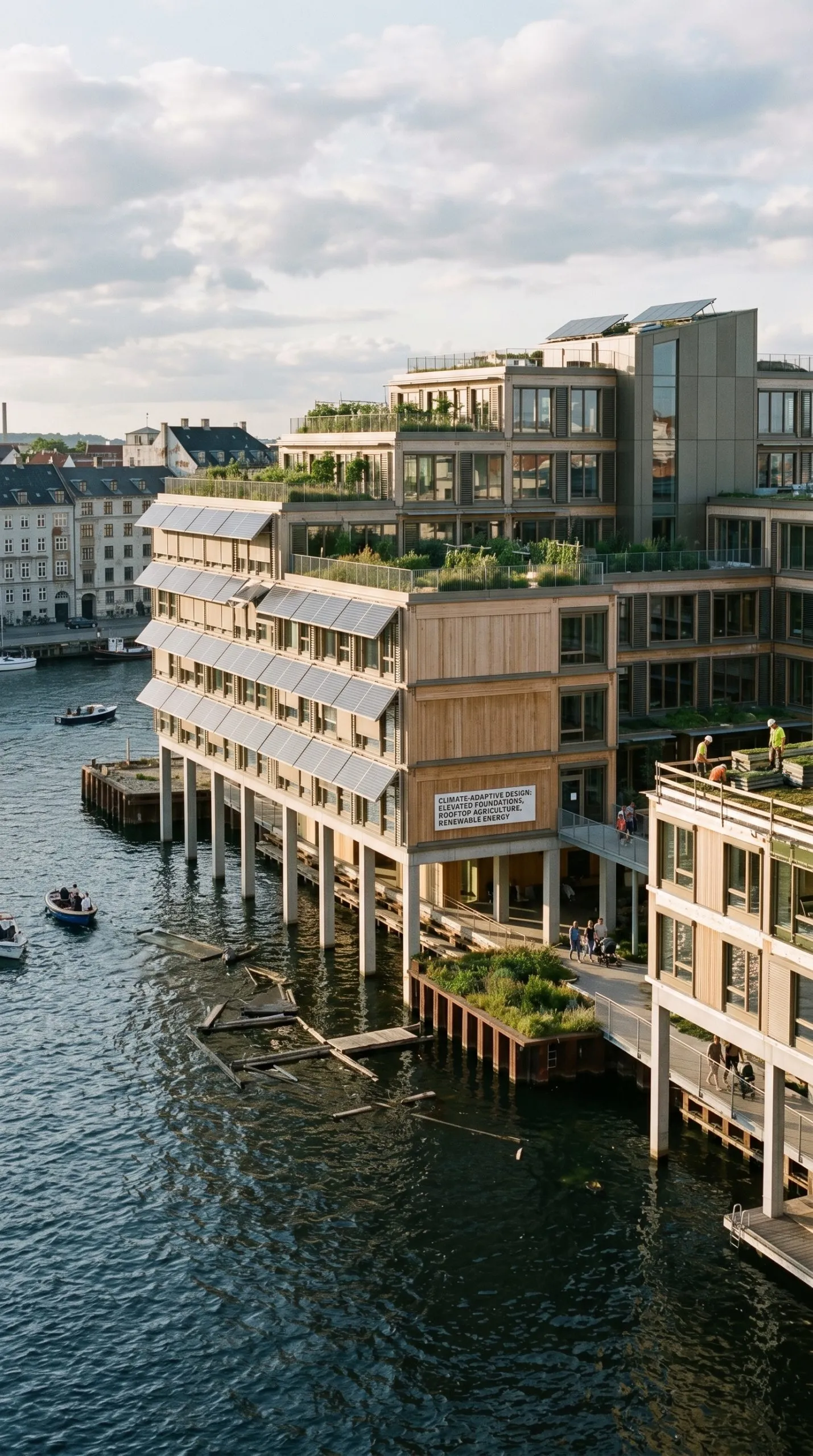
Design buildings to resist climate-driven stresses equivalent to warmth, flooding, and intense rainfall. Prioritize sturdy supplies, floodable floor flooring, and redundant techniques to protect performance throughout excessive occasions.
- Elevated companies and watertight enclosures scale back downtime after rainfall occasions.
- Passive cooling methods decrease dependence on mechanical techniques throughout warmth waves.
- Modular development allows speedy reconstruction following injury.
Catastrophe threat discount and early warning techniques
Combine catastrophe threat discount with design to assist swift responses. Early warning data informs evacuations, emergency entry, and post-event evaluation.
- Web site choice considers flood plains, landslide paths, and wind publicity.
- Sturdy drainage and floodable zones defend important amenities like hospitals and colleges.
- Actual-time monitoring of structural well being helps proactive upkeep cycles.
Interact communities to form resilience measures that mirror native wants. Co-design ensures housing, public areas, and companies stay purposeful below local weather stress.
- Group-led threat assessments establish precedence vulnerabilities.
- Shared areas and cooling corridors scale back city warmth publicity in dense neighborhoods.
- Native data informs upkeep schedules and protecting land administration.
Agricultural adaptation methods
Buildings supporting farming techniques combine climate-smart practices to maintain yields. This contains managed environments, water-efficient irrigation, and crop diversification inside provide chains.
- Greenhouse installations use insulation and shading to stabilise microclimates.
- Water reuse and vertical farming scale back irrigation demand.
- Crop plans align with projected rainfall patterns and soil well being administration.
Conclusion
Local weather change influences how we design, function, and keep constructed environments. Recognizing rising dangers and alternatives allows tangible enhancements in resilience, effectivity, and long run efficiency throughout initiatives.
- Undertake resilient design rules that account for shifting local weather patterns and evolving threat profiles.
- Prioritize vitality effectivity and low emission supplies to scale back lifecycle emissions and working prices.
- Combine renewable vitality and sensible techniques to optimize on web site and constructing vitality use.
Efficient motion hinges on collaboration amongst policymakers, engineers, builders, and communities. Aligning challenge objectives with worldwide and nationwide frameworks helps secure, wholesome, and economical buildings whereas advancing broader local weather aims.
Really feel Free To Discover Few Of Our Monetary Calculators & Guides