
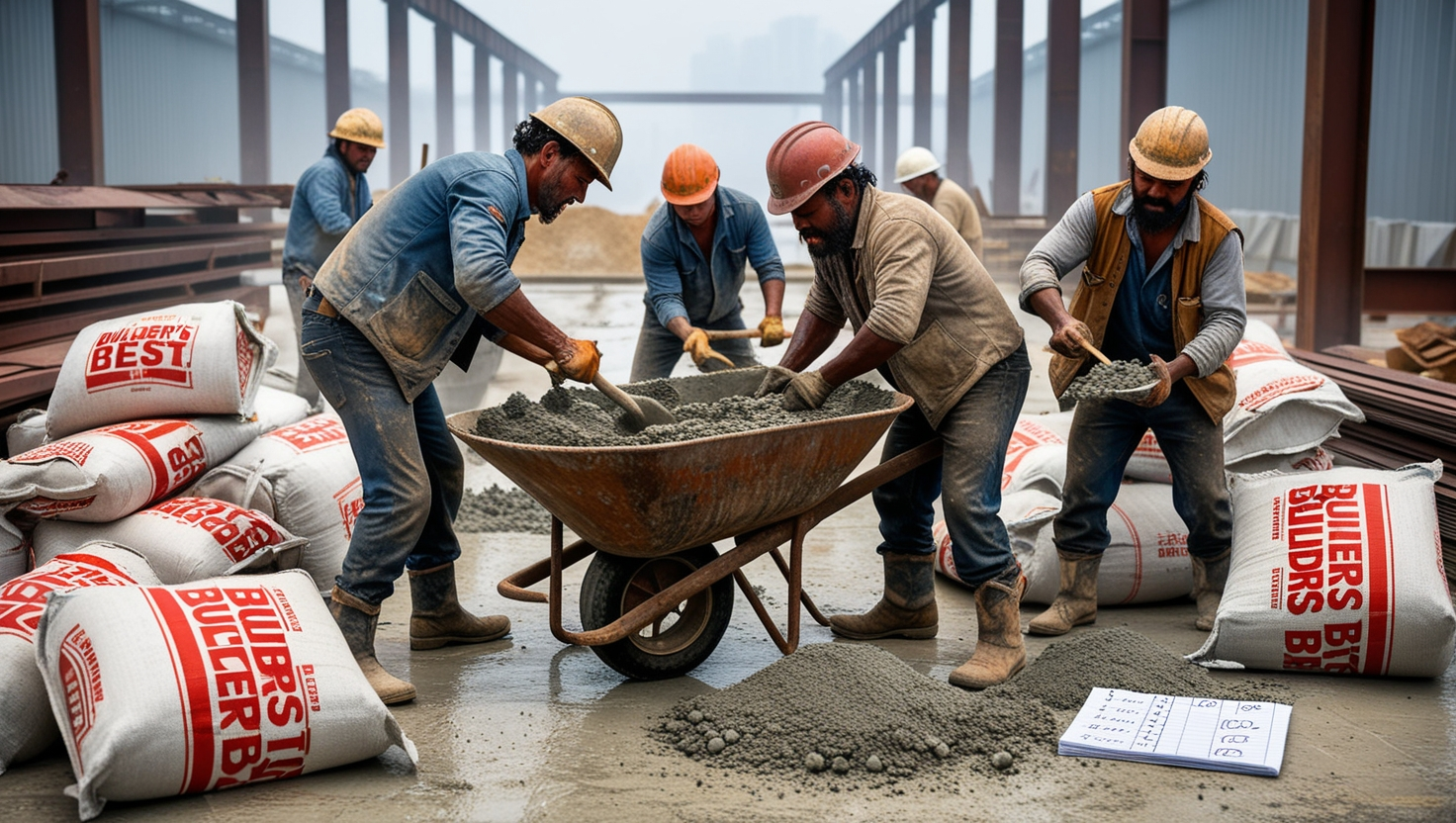
How Many Luggage of Cement Are Utilized in a 1:3:6 Ratio Concrete?: Roughly 3 luggage of cement per cubic meter of concrete in a 1:3:6 combine.
Key Takeaways:
In the case of mixing concrete, realizing the appropriate proportions of supplies—cement, sand, and aggregates—is crucial for attaining the specified energy and sturdiness. One generally used concrete combine ratio is 1:3:6, the place 1 half is cement, 3 elements are sand (superb combination), and 6 elements are gravel or crushed stone (coarse combination).
This ratio is usually used for much less demanding development initiatives corresponding to pathways, sidewalks, or non-structural slabs.
The query that arises for a lot of is: How a lot cement is required for a 1:3:6 concrete combine? For the standard measurement of 1 cubic meter (1 m³) of concrete, understanding the exact cement requirement is essential for ordering supplies and planning the worksite.
To interrupt it down:
- Concrete Combine Proportions: Within the 1:3:6 combine ratio, the overall variety of elements is 10 (1 + 3 + 6), with 1 half devoted to cement. Due to this fact, in 1 cubic meter of concrete, solely 0.1 cubic meter will probably be cement.
- Cement Weight Calculation: The density of cement is roughly 1440 kg/m³. By multiplying the quantity of cement (0.1 m³) by this density, we get a complete of 144 kg of cement required for 1 cubic meter of concrete.
- Variety of Cement Luggage: Since a normal cement bag weighs 50 kg, the overall cement required (144 kg) would translate to roughly 2.88 luggage of cement. When rounding as much as the closest entire bag, this implies you have to 3 luggage of cement for each cubic meter of concrete you combine.
This calculation helps you establish what number of luggage of cement to buy, guaranteeing you might have sufficient materials available for the mission with out overordering.
Moreover, understanding these ratios is essential for price estimation, serving to you intend your funds and keep away from wastage. Whether or not you’re setting up a driveway, a basis, or every other concrete construction, this straightforward system ensures that your combine is each cost-effective and appropriately proportioned.

Why This Article Is Price Studying
Concrete is a basic part in development, and getting the correct mix is important for guaranteeing the energy and sturdiness of your work. Whether or not you’re a contractor or DIYer, realizing what number of luggage of cement you’ll want per cubic meter for a particular combine ratio can prevent money and time.
On this article, we’ll clarify the whole lot you’ll want to know to calculate the variety of luggage of cement required for a 1:3:6 concrete combine.
1. Introduction to Concrete Mixes
Concrete is made by mixing cement, sand, combination (gravel), and water in a specified ratio. This combine ratio is crucial as a result of it determines the energy, sturdiness, and workability of the concrete. Some of the widespread concrete mixes is the 1:3:6 ratio, which is usually used for non-structural concrete purposes like footings, pavements, and driveways.
What’s a Concrete Combine Ratio?
A concrete combine ratio refers back to the proportion of every materials used within the concrete combine. The primary quantity refers to cement, the second to sand, and the third to aggregates. For instance, in a 1:3:6 combine ratio, 1 half cement is combined with 3 elements sand and 6 elements aggregates. The ratio ensures that the concrete has the appropriate consistency and energy for its meant use.
Significance of Right Cement Portions
The correct amount of cement is essential for attaining the specified concrete energy. Too little cement ends in weak concrete which will crack beneath stress, whereas an excessive amount of cement can result in an unnecessarily costly combine. Correct cement calculation ensures that your concrete combine is environment friendly and cost-effective.
GET ACCESS TODAY TO OUR ALL-IN-ONE MANAGEMENT SOLUTION FOR BUILDERS THAT WORKS FOR THE COMPLETE CONSTRUCTION CYCLE: Estimating, Challenge Progress Reviews, Certificates, Prices Evaluation, and extra. CHECK HERE
2. What’s the 1:3:6 Concrete Combine Ratio?
The 1:3:6 combine ratio is a particular sort of concrete combine designed for non-load-bearing purposes. It’s generally used for sidewalks, pavements, or basis footings, the place a decrease energy of concrete is appropriate.
Defining the 1:3:6 Combine Ratio
On this ratio, “1” refers to cement, “3” to sand, and “6” to coarse aggregates (normally gravel or crushed stone). This implies for each 1 a part of cement, there are 3 elements of sand and 6 elements of combination. The combination is taken into account a comparatively weaker concrete due to the excessive proportion of aggregates to cement.
How the Ratio Impacts Concrete Power
The combination ratio straight influences the energy of the concrete. Within the 1:3:6 ratio, the upper combination content material ends in a decrease energy combine in comparison with stronger mixes, such because the 1:2:4 ratio (generally used for structural concrete). The combination is ideal for purposes the place excessive energy isn’t mandatory, however sturdiness remains to be vital.
3. The way to Calculate Cement for 1:3:6 Combine Ratio
To calculate the cement required in a 1:3:6 combine ratio, you need to decide the overall quantity of concrete you’re going to use and the proportion of cement within the combine.
Step-by-Step Information to Calculate Cement Quantity
To calculate the cement required for 1 cubic meter of concrete:
- Add up the overall elements within the ratio: 1 (cement) + 3 (sand) + 6 (combination) = 10 elements.
- The cement makes up 1 half out of 1


Formulation for Figuring out Cement Required Per Cubic Meter

4. Understanding Cement Quantity in Concrete Combine
Cement quantity is without doubt one of the most crucial parts in concrete mixes. The amount of cement determines the concrete’s consistency and its general energy.
The Idea of Cement Quantity in Concrete
Cement quantity refers back to the quantity of cement used within the combine. That is straight proportional to the energy of the concrete—extra cement usually means stronger concrete. Nonetheless, extra cement results in waste, so it’s essential to get the correct amount primarily based on the specified energy.
The way to Measure Cement Quantity in Cubic Meters
To measure cement quantity, you’ll want to know the quantity of the concrete combine. As an example, for 1 cubic meter of concrete, utilizing the 1:3:6 combine ratio, the cement quantity is calculated as 0.1 cubic meters.
5. How Many Luggage of Cement Are Required for 1 Cubic Meter?
The variety of luggage of cement required is determined by the quantity of cement wanted and the load of every cement bag.
Calculation of Cement Luggage Per Cubic Meter

Because of this for each cubic meter of 1:3:6 concrete, you’ll want roughly 3 luggage of cement.
Rationalization of Cement Bag Weight and Conversion
Cement luggage sometimes are available in 50 kg sizes, though smaller or bigger luggage could also be out there in sure areas. For correct cement calculations, it’s important to make use of the load of the luggage out there to you and make sure the appropriate variety of luggage primarily based on the combo ratio.
6. Why Cement Bag Measurement Issues
The scale of cement luggage can range, and this impacts what number of luggage are wanted for a given quantity of concrete.
Frequent Sizes of Cement Luggage and Their Weight
Cement luggage usually are available in 25 kg, 40 kg, or 50 kg sizes. In lots of elements of the world, the usual bag measurement is 50 kg. If you happen to’re utilizing a unique measurement, the calculation will must be adjusted accordingly.
How Bag Measurement Impacts the Variety of Luggage Required

7. Different Supplies within the 1:3:6 Combine Ratio
Whereas cement is a essential ingredient within the 1:3:6 combine ratio, sand and aggregates additionally play vital roles. The proportions of those supplies have an effect on the sturdiness, energy, and workability of the concrete.
Sand and Mixture Proportions within the Combine
In a 1:3:6 concrete combine ratio:
- 1 half cement
- 3 elements sand
- 6 elements combination
These supplies, when mixed, kind a balanced combine that may obtain the specified energy for non-structural functions. Sand acts as a superb combination, filling gaps between bigger particles and making a clean, workable combine, whereas the coarse combination (gravel or crushed stone) provides bulk and dimensional stability to the concrete.
Calculating Sand and Mixture for 1 Cubic Meter
To find out how a lot sand and combination are required per cubic meter in a 1:3:6 combine:

Figuring out the exact amount of every materials is crucial to producing a dependable concrete combine that performs properly in sturdiness and workability.
GET ACCESS TODAY TO OUR ALL-IN-ONE MANAGEMENT SOLUTION FOR BUILDERS THAT WORKS FOR THE COMPLETE CONSTRUCTION CYCLE: Estimating, Challenge Progress Reviews, Certificates, Prices Evaluation, and extra. CHECK HERE
8. Components Affecting Cement Amount in Concrete
There are numerous exterior components that affect the quantity of cement required for a concrete combine, such because the environmental situations and the specified energy of the concrete. Adjusting the cement quantity to account for these components can enhance the standard and longevity of your concrete.
Concrete Power and Combine Variations
The 1:3:6 combine ratio yields a comparatively lower-strength concrete, appropriate for footings, walkways, and non-load-bearing components. Nonetheless, if the mission requires a better energy concrete (e.g., for structural partitions or columns), you would want to extend the cement content material within the combine ratio, corresponding to shifting to a 1:2:4 combine ratio. Greater cement content material ends in stronger concrete but additionally will increase the general mission price.
Moisture Content material and Its Impression on Cement Required
The moisture content material in sand and aggregates can alter the required cement amount. If the sand and aggregates include moisture, the quantity of added water ought to be decreased, as extra water can compromise the concrete’s integrity.
Conversely, if the supplies are dry, extra water could also be mandatory to make sure correct hydration and bonding. Understanding moisture content material can assist keep away from overuse of cement and produce a constant concrete combination.
9. The way to Keep away from Waste When Utilizing Cement
Utilizing an excessive amount of or too little cement can’t solely waste supplies but additionally result in a weaker combine or an unnecessarily costly mission. Correct calculation and storage practices can assist you keep away from such waste.
Suggestions for Calculating the Proper Quantity of Cement
To keep away from extra utilization, precisely decide the required quantity of concrete after which calculate the precise quantity of cement utilizing the combo ratio. Use exact measurements for supplies, and guarantee you might be conscious of native bag sizes and situations, which might affect your calculations.
Stopping Overuse and Underuse of Cement
Sustaining the appropriate proportions and appropriately estimating your cement wants can stop each overuse and underuse. Overuse of cement can result in a stiff, hard-to-work-with concrete, whereas underuse could cause weak concrete that’s susceptible to cracking. Cautious planning and proper measurements assist keep away from these points, guaranteeing a sturdy, cost-effective consequence.
10. Conclusion: Abstract of Cement Calculation for Concrete
Calculating the variety of cement luggage required for a 1:3:6 combine ratio includes understanding the combo ratio, cement quantity, and components like moisture content material. A cautious strategy to cement measurement results in an environment friendly, robust, and cost-effective concrete combine.
Sensible Suggestions for Mixing Concrete with a 1:3:6 Ratio
Once you’re making ready to combine your concrete, having the appropriate gear and supplies is simply as vital as realizing the combo ratio. Listed here are some finest practices:
- Measure Rigorously: Use measuring buckets or containers to make sure you have the right ratios of cement, sand, and combination. Inaccurate measurements can result in weak or inconsistent concrete.
- Use Clear Supplies: Sand and combination ought to be clear and freed from contaminants like dust, clay, and natural matter. These impurities can weaken the concrete and scale back its sturdiness.
- Combine Completely: A uniform combine is crucial for even energy and consistency. If you happen to’re mixing by hand, be sure that the cement, sand, and combination are completely mixed earlier than including water. For big initiatives, utilizing a mechanical mixer can save time and guarantee a extra constant mix.
- Add Water Steadily: Begin by including just a little water and regularly enhance till you attain the specified consistency. Keep away from including an excessive amount of water, as this may scale back the concrete’s energy and sturdiness. A very good guideline is to goal for a workable however agency combine.
- Think about Native Situations: In sizzling or dry situations, concrete can lose moisture rapidly, which can require changes in water content material. Conversely, in very moist situations, chances are you’ll want to cut back the quantity of water to keep up the right combine.
Benefits and Limitations of the 1:3:6 Combine Ratio
Understanding the strengths and weaknesses of the 1:3:6 combine ratio can assist you determine if it’s proper to your mission.
Benefits
- Value-Efficient: Since this ratio makes use of a decrease proportion of cement relative to different mixes, it’s sometimes extra reasonably priced.
- Very best for Non-Structural Makes use of: The 1:3:6 ratio is appropriate for non-load-bearing purposes, corresponding to backyard paths, pavements, or footings the place excessive energy isn’t important.
Limitations
- Decrease Power: Due to the excessive combination content material, this combine will not be appropriate for structural purposes. For load-bearing columns, beams, or slabs, a stronger combine (e.g., 1:2:4) is beneficial.
- Restricted Sturdiness in Harsh Environments: The 1:3:6 combine might not be preferrred in areas with excessive climate or publicity to chemical compounds and salt (e.g., marine environments), as these situations can speed up degradation.
Regularly Requested Questions
Listed here are solutions to some widespread questions on calculating cement for a 1:3:6 concrete combine ratio:
Q1: Can I exploit a unique combine ratio for related initiatives? Sure, the 1:3:6 combine ratio is just one of many potential choices. Stronger ratios like 1:2:4 and even 1:1.5:3 are beneficial for structural components that require larger energy. At all times match the combo ratio to the particular wants of your mission.
Q2: How does the 1:3:6 combine have an effect on curing time? Curing time for a 1:3:6 combine is mostly just like different ratios, however due to the decrease cement content material, it could take just a little longer to succeed in full energy. Correct curing by retaining the concrete damp for no less than 7 days helps obtain optimum outcomes.
Q3: What if I add an excessive amount of water? Extreme water dilutes the cement and reduces the ultimate energy of the concrete. Stick with a average water-cement ratio to keep up sturdiness and energy.
Abstract: Key Factors on Calculating Cement for a 1:3:6 Combine Ratio
To wrap up, listed here are the important factors to recollect when calculating the variety of cement luggage for a 1:3:6 concrete combine:
- Combine Ratio Overview: Within the 1:3:6 combine, you might have 1 half cement, 3 elements sand, and 6 elements combination. This ratio is appropriate for non-structural concrete purposes.
- Cement Calculation: For 1 cubic meter of 1:3:6 concrete, you’ll want roughly 3 luggage of cement (assuming a 50 kg bag).
- Think about Cement Bag Measurement: Use 50 kg as a normal; if utilizing completely different sizes, alter your calculations accordingly.
- Further Parts: Make sure you measure sand and combination primarily based on the right proportions for a robust and constant combine.
- Environmental Components: Regulate water content material and curing practices primarily based on climate situations to forestall drying or weakening of the concrete.
Ultimate Ideas
Concrete combine ratios are important for attaining the appropriate stability of energy, sturdiness, and cost-efficiency. With the appropriate calculations, a 1:3:6 ratio can present an reasonably priced, sturdy resolution for a lot of initiatives. Bear in mind, exact measurements and mixing practices are key to a profitable concrete combine.
This information ought to now equip you with the important information to calculate cement for a 1:3:6 concrete combine ratio precisely. By following these tips, you’ll be well-prepared to create concrete that meets your mission’s specs.
GET ACCESS TODAY TO OUR ALL-IN-ONE MANAGEMENT SOLUTION FOR BUILDERS THAT WORKS FOR THE COMPLETE CONSTRUCTION CYCLE: Estimating, Challenge Progress Reviews, Certificates, Prices Evaluation, and extra. CHECK HERE
HAVE YOU TRIED ONE OF THESE FREE CALCULATOR YET?
- Paint Calculator
- Brick Calculator
- Roofing Calculator
- Tile Calculator
- Development Supplies Calculator
- Flooring Value Calculator
- Concrete Combine Calculator
- Structural Metal Calculator
- Power Effectivity Calculator
- Market Sector Exercise Calculator
- Invoice of Amount (BOQ) Calculator
- Landscaping and Backyard Value Calculator
- Free Development Value Calculator: Constructing Value Estimator
- Development Methodology Template Generator


