The usage of bioplastics in constructing and building refers back to the integration of bio-based, biodegradable, or compostable polymers as options to conventional building supplies corresponding to concrete, metal, timber, and petrochemical plastics (like PVC and polystyrene). Pushed by the worldwide push to cut back the carbon footprint of civil engineering initiatives, bioplastics are more and more researched for his or her potential to decrease embodied power and supply sustainable end-of-life choices for constructing elements.
Whereas bioplastics current important environmental benefits, their widespread adoption as major structural parts stays restricted by their mechanical properties, long-term sturdiness, and manufacturing prices in comparison with established heavy building supplies.
Sorts of Bioplastics in Building
A number of distinct classes of biopolymers are at present utilized or present process structural testing in civil engineering functions:
- Polylactic Acid (PLA): Derived from fermented plant starch (often corn or sugarcane), PLA is the commonest bioplastic. In building, it’s primarily used for 3D-printed architectural fashions, non permanent structural kinds, and inside finishes.
- Polyhydroxyalkanoates (PHA): Produced by bacterial fermentation, PHAs are extremely biodegradable and possess bodily properties just like conventional artificial plastics. They’re utilized in bio-based resins and protecting coatings.
- Mycelium Composites: Although technically a bio-composite reasonably than a pure plastic, vegetative fungal development (mycelium) mixed with agricultural waste could be cured into inflexible, brick-like supplies that carry out equally to polystyrene foams.
- Cellulose Acetate: Derived from wooden pulp and cotton fibers, cellulose-based plastics are utilized in device handles, movies, and architectural membranes.
Present Purposes
Non-Structural Parts
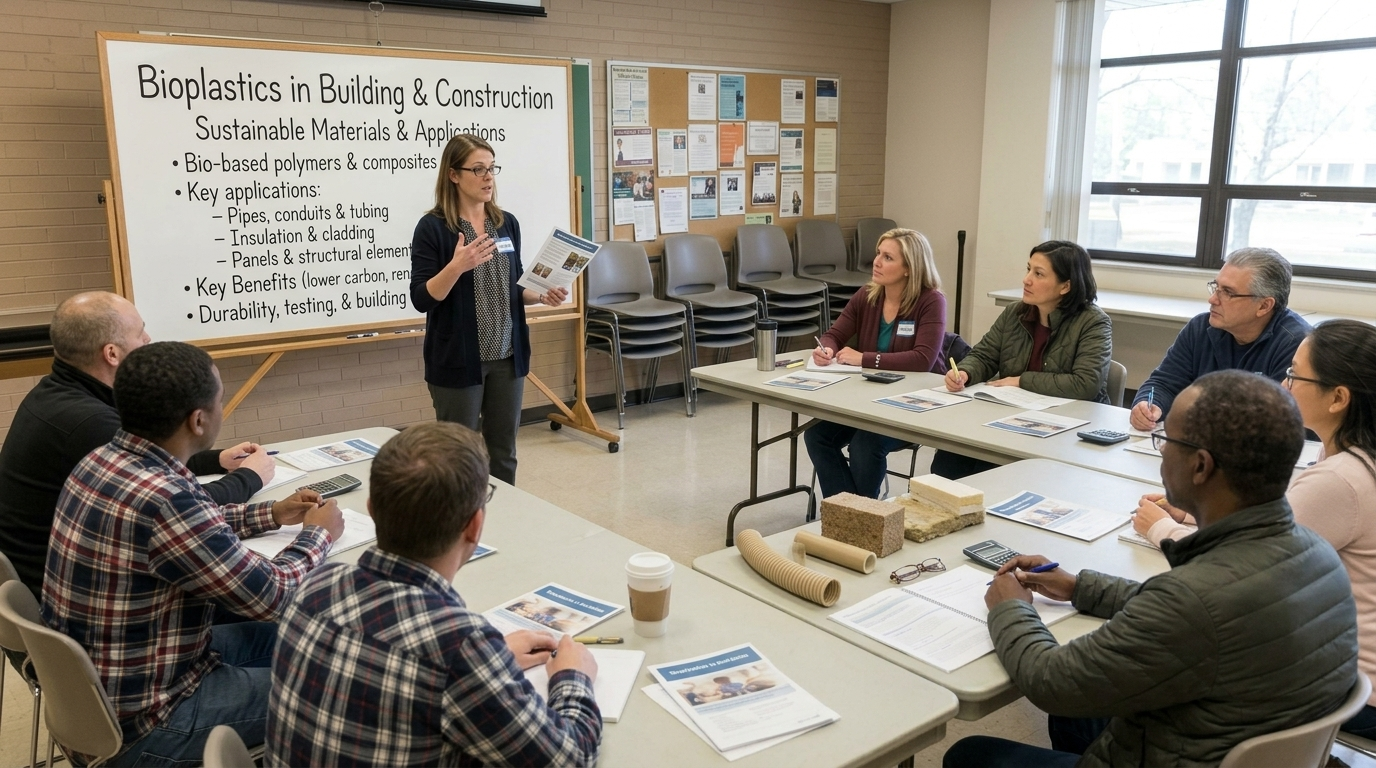
At present, bioplastics are most profitable when changing conventional petrochemical plastics in non-load-bearing situations. Frequent replacements embrace PVC piping, electrical conduit housings, and inside ornamental panels. Bio-based resins are additionally more and more utilized in mixture with pure fibers (like hemp or flax) to create sturdy composite panels for inside partitions.
Insulation and Cladding
Conventional petroleum-based insulation, corresponding to expanded polystyrene (EPS) and polyurethane foam, contributes closely to environmental degradation. Bio-foams derived from PLA, mycelium, and tannin-based resins provide comparable thermal resistance values. These bio-insulators are vapor-permeable and may regulate indoor humidity whereas sequestering carbon all through the lifespan of the constructing.
Structural Limitations and Engineering Challenges
For major structural roles—corresponding to substructure foundations, load-bearing columns, and flooring slabs—bioplastics can’t at present substitute concrete or metal. The restrictions are outlined by a number of important engineering components:
- Compressive and Tensile Power: Bioplastics lack the large compressive energy of strengthened concrete and the excessive tensile capability of metal. Their load-bearing functions are restricted to non permanent buildings or low-stress architectural pavilions.
- Sturdiness and Degradation: A core good thing about bioplastics—their biodegradability—is a definite drawback in everlasting civil engineering. Constructing elements should stand up to a long time of publicity to moisture, UV radiation, and microbial assault with out dropping structural integrity.
- Hearth Resistance: Many bio-based polymers are extremely flamable and don’t meet the stringent fire-safety requirements required for business or residential high-rises until closely handled with fire-retardant chemical substances, which might negate their ecological advantages.
Financial Feasibility
The price estimation and monetary viability of bioplastics stay a barrier to mainstream adoption. The manufacturing processes for PHA and superior PLA composites are extremely energy-intensive and depend on agricultural feedstocks. Consequently, the unit price per sq. meter of bioplastic supplies typically drastically exceeds that of conventional, closely backed industrial supplies like commonplace Portland cement and mass-produced PVC.
Future Outlook
The consensus inside the civil engineering neighborhood is that bioplastics won’t solely substitute foundational supplies like concrete and metal within the foreseeable future. As a substitute, the trade is shifting towards a hybrid strategy. Bioplastics are projected to seize important market share within the secondary parts of constructing building, together with facades, thermal insulation, acoustic paneling, and non permanent formwork. Advances in bio-refining and fiber-reinforced biopolymers might finally yield hybrid supplies that bridge the hole between ecological sustainability and structural permanence.