Good Residing: In immediately’s fast-evolving digital age, the idea of house has remodeled from a mere shelter to a hub of clever techniques working seamlessly to make sure security, consolation, and peace of thoughts. Amongst these improvements, AI-powered safety is on the forefront—reshaping how we defend and work together with our residential areas.
From sensible surveillance cameras that acknowledge faces to predictive menace detection techniques that study your habits, synthetic intelligence is not a futuristic idea—it’s turning into the brand new commonplace for trendy house safety.
This text explores how AI-driven applied sciences are revolutionizing residential security, the important thing options that make them indispensable, and why investing in a better, safer house isn’t only a luxurious—it’s a necessity. Whether or not you’re a tech fanatic or a home-owner seeking to improve your safety, this deep dive into AI in sensible residing provides insights that would redefine your concept of house safety.
The Rise of AI in Residential Safety
As of 2024, the worldwide marketplace for sensible house safety techniques is anticipated to exceed $35 billion, rising at a CAGR of over 20% since 2021. In response to a report by Statista, greater than 300 million sensible house safety gadgets have been put in worldwide, with North America main adoption.
AI-powered applied sciences corresponding to facial recognition, anomaly detection, and predictive analytics are more and more built-in into residential safety, providing real-time response and better accuracy. These applied sciences not solely cut back false alarms but in addition improve the effectivity of emergency response.
Given this context, this text will discover how synthetic intelligence is remodeling the way in which owners safe their residing areas. It is going to cowl the evolution of AI in house safety, forms of AI-enabled applied sciences, integration challenges, and the function of cloud infrastructure.
Moreover, we’ll assessment how firms like Coram AI are advancing the market and description sensible concerns for owners seeking to undertake AI-based techniques.

Evolution of Conventional to AI-Pushed House Safety
To start with, conventional house safety techniques primarily relied on movement sensors, alarm techniques, and CCTV setups with restricted analytics capabilities. These techniques have been reactive, typically triggering alerts after an incident occurred.
Nonetheless, AI has shifted this reactive mannequin to a extra proactive method. With machine studying algorithms and knowledge analytics, trendy techniques can predict uncommon habits patterns, flag potential threats, and even study from earlier incidents to reinforce efficiency over time. Consequently, residential safety has develop into extra clever and anticipatory.

Key Elements of AI-Powered Safety Techniques
Subsequent, it’s necessary to know the core parts that allow AI-driven safety in residential environments. These techniques sometimes embody sensible cameras, AI-enabled movement detectors, biometric entry controls, and centralized management hubs that course of knowledge in actual time.
Furthermore, pure language processing (NLP) and laptop imaginative and prescient permit these techniques to determine particular people, differentiate between people and pets, and ship context-based alerts. These options are built-in to work seamlessly, typically by means of a cellular app, permitting owners to observe and handle safety remotely.
Position of Cloud Integration in AI Safety
Cloud infrastructure performs a vital function in scaling AI-powered residential safety. It permits real-time knowledge processing, safe storage, and software program updates with out bodily intervention. A key know-how on this house is the cloud safety digital camera, which streams and analyzes footage utilizing cloud-based AI engines.
Corporations like Coram AI have developed superior cloud-integrated safety cameras that leverage AI to ship correct, actionable alerts. Their techniques use cloud processing to detect anomalies, acknowledge faces, and supply a log of occasions that may be accessed on demand. This reduces dependency on native storage and enhances safety by means of encrypted cloud backups.
Advantages of AI in Residential Safety
Consequently, AI-powered techniques provide a number of tangible advantages for owners. First, they enhance detection accuracy by minimizing false positives by means of studying algorithms. Second, they allow quicker emergency response by means of real-time alerts and distant entry.
As well as, AI permits for customizable safety protocols. Householders can set particular zones, schedules, and set off actions based mostly on predefined guidelines. This stage of customization was not attainable with older techniques.

Challenges in Implementing AI Safety Techniques
Nonetheless, there are some boundaries to widespread adoption. One of many primary challenges is knowledge privateness. AI-powered techniques gather huge quantities of information, which could be delicate if mishandled. Guaranteeing GDPR or native compliance is important.
Moreover, there are issues about system vulnerability to cyberattacks. Common firmware updates, robust encryption protocols, and safe authentication strategies are essential to mitigate these dangers. Householders additionally want to contemplate compatibility with current sensible gadgets and community infrastructure.
Good Integration with IoT and House Automation
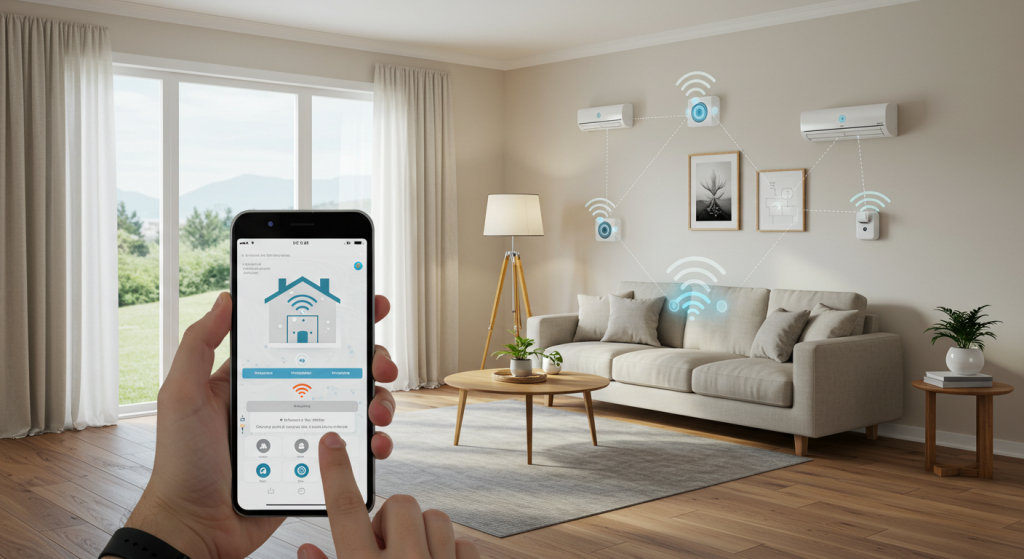
Consequently, integrating AI-based safety techniques with current sensible house ecosystems turns into very important. AI techniques typically join with gadgets like sensible lights, door locks, and thermostats to create a unified management panel.
For instance, a system can set off lights to activate when an intrusion is detected or ship notifications when a door is opened throughout off-hours. This interconnectedness not solely improves safety but in addition enhances consumer comfort.

The Position of Predictive Analytics
Moreover, predictive analytics performs a rising function in residential safety. By analyzing historic habits and environmental knowledge, AI can anticipate potential threats. As an example, if a system notices repeated visits by an unrecognized particular person throughout odd hours, it will possibly alert the house owner earlier than an incident happens.
This functionality strikes house safety from reactive protection to proactive prevention, making it simpler in deterring threats.
How Corporations Like Coram AI Are Main Innovation
Equally, firms like Coram AI are pushing the boundaries by integrating multi-modal knowledge—audio, video, and environmental sensors—to create smarter safety techniques. Their focus is on delivering excessive accuracy with minimal consumer enter.
By combining AI with cloud infrastructure, Coram AI permits scalable and cost-efficient safety options for a variety of house sizes and layouts. Additionally they emphasize user-friendly interfaces and fast deployment to decrease the entry barrier for owners.

Future Developments in AI House Safety
Trying forward, future developments in AI-powered house safety will possible embody deeper integration with wearable tech, drone surveillance, and blockchain-based identification verification. These improvements intention to supply larger personalization, improved knowledge integrity, and real-time mobility in surveillance.
Voice-enabled instructions, emotion recognition, and steady studying fashions are additionally anticipated to reinforce responsiveness and adaptableness.
FAQs
What’s an AI-powered house safety system?
An AI-powered house safety system makes use of synthetic intelligence applied sciences like machine studying and laptop imaginative and prescient to detect, analyze, and reply to safety threats extra precisely and proactively.
Are cloud-based safety techniques secure?
Sure, when utilizing robust encryption, multi-factor authentication, and safe cloud providers from respected suppliers, cloud-based techniques can provide strong safety and adaptability.
Can AI safety techniques be built-in with sensible house gadgets?
Completely. Most AI techniques are designed to combine with common sensible house platforms, permitting for unified management and automation.
Conclusion
In abstract, AI is remodeling house safety by shifting from reactive monitoring to proactive menace prevention. With capabilities like real-time analytics, facial recognition, and integration with different sensible gadgets, AI-powered techniques are providing larger effectivity and reliability.
Cloud infrastructure, significantly by means of improvements by firms like Coram AI, additional amplifies these advantages by making superior options accessible and scalable.
Key Takeaways
- The worldwide sensible house safety market is rising quickly, pushed by AI integration.
- Core parts of AI safety techniques embody sensible cameras, movement sensors, and cloud processing.
- Cloud-based options like these from Coram AI improve safety by means of real-time analytics and safe knowledge storage.
- Privateness and cybersecurity stay key issues, requiring strong knowledge safety methods.
- Future developments level towards extra predictive, adaptive, and built-in AI options in house safety.